

For many buyers, the survey feels like the final exam.
The haul-out is complete. The moisture meter has been waved around. The engine has been inspected. The surveyor’s report lands in your inbox, and after a quick review you breathe a sigh of relief.
“Good boat.”
Maybe.
But a survey isn’t really the end of the buying process. In many ways, it’s the beginning.
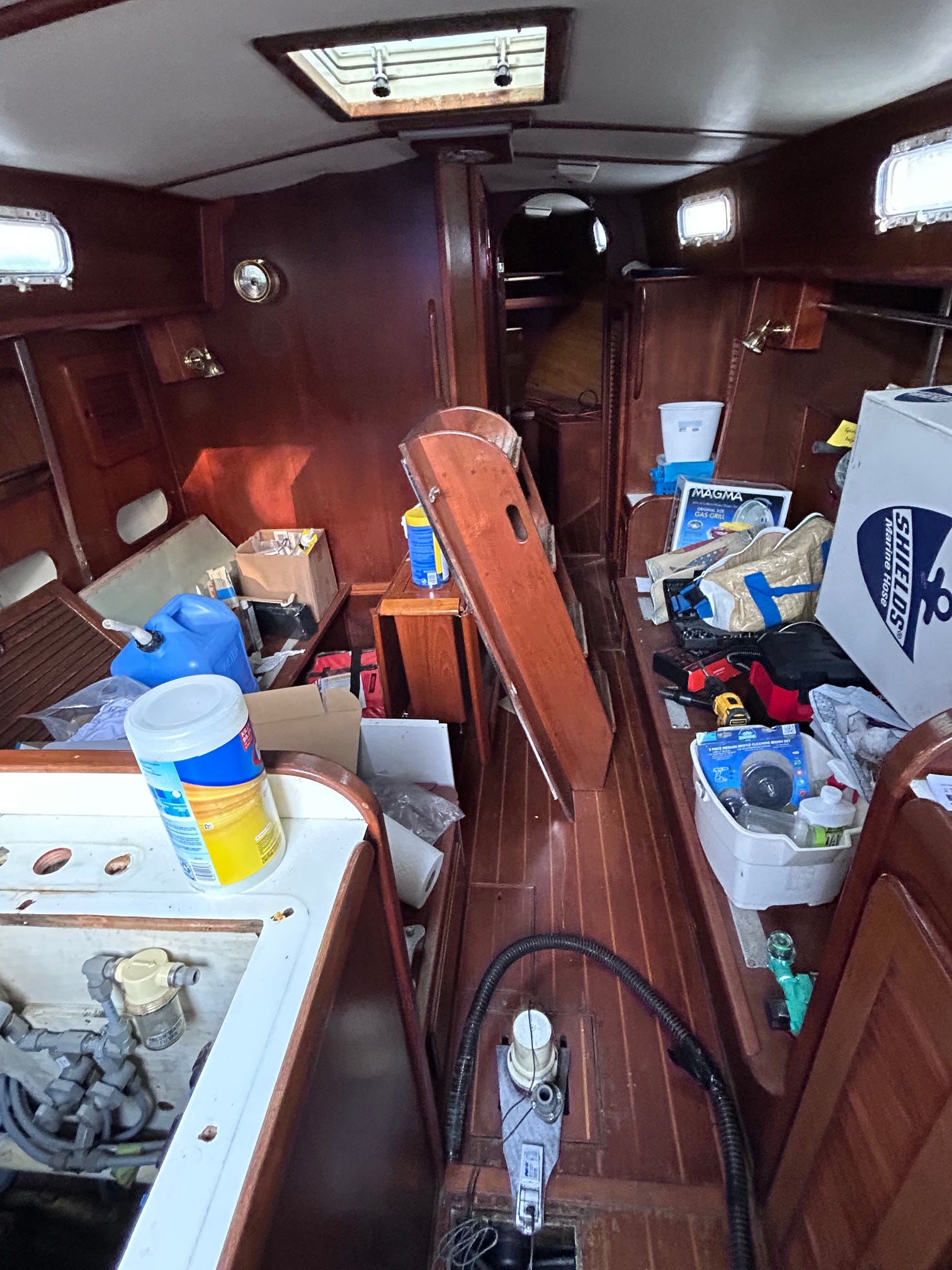
A good marine survey is one of the best investments a buyer can make. A skilled surveyor can identify structural issues, safety concerns, deferred maintenance, and expensive surprises before they become your problem. They can help separate a fundamentally sound vessel from a floating science experiment.
But even the best survey has limits.
Surveyors don’t spend weeks living aboard. They don’t anchor in a squall. They don’t reef at midnight. They don’t discover that the freshwater pump only acts up when someone is trying to make coffee or that the starboard locker floods only when sailing hard on port tack.
That education belongs to the owner.
No surveyor has ever spent enough time aboard to discover every way a boat can surprise you.
Every boat has a personality. Some reveal themselves immediately. Others take months.
Many new owners expect a used boat to become fully known within a weekend. They want certainty. They want a complete list of every issue before casting off.
That isn’t how boats work.
The process of learning a new-to-you boat is equal parts discovery, frustration, and satisfaction.
You learn which systems were thoughtfully installed and which were added at 4:59 on a Friday afternoon. You learn where the previous owner cut corners and where they spared no expense. You learn which noises are normal and which deserve investigation.
And sometimes things break.
Not because the surveyor missed something. Not because you made a bad purchase. Simply because boats are complex machines living in one of the harshest environments imaginable.
We’ve met sailors who become discouraged when the first few months don’t go perfectly. A pump fails. An alternator quits. A hatch leaks during the first hard rain.
They begin wondering if they bought the wrong boat.
Usually they didn’t.
They’re simply experiencing what every boat owner eventually experiences: the transition from buyer to caretaker.
The relationship changes once the paperwork is signed.
The boat stops being “the boat we bought” and becomes “our boat.”
Every repair teaches something. Every small failure reveals a weakness. Every successful fix builds confidence. Over time, the owner develops something far more valuable than a clean survey report: familiarity.
That familiarity is what creates trust offshore.
When conditions deteriorate, you don’t rely on a survey completed eighteen months ago. You rely on your understanding of the boat. You know where the shutoffs are. You know how the engine sounds when it’s happy. You know which breaker powers what and where the spare parts are hidden.
That knowledge comes only from use.
A good survey helps ensure you’re starting with a solid foundation. It can save you from expensive mistakes and dangerous problems.
But ownership is where the real education begins.
The goal isn’t to find a boat with no issues. Such a boat probably doesn’t exist.
The goal is to find a fundamentally sound boat and then invest the time necessary to understand her.
Some lessons will be expensive.
Some will be frustrating.
A few will make for great dockside stories.
All of them are part of the process.
And if you’re lucky, one day you’ll realize that the boat which once felt unfamiliar now feels like an old friend.
That’s when the adventure really begins.
Now we’ve got to get back to work on our boat!
BoatFools Question of the Week: What was the first unexpected problem you discovered after buying your boat, and what did it teach you?
Bought a 2005 Catalina last fall and first sail which was to haulout for winter, the clamp holding on the heat exchanger hose failed. High water alarm coupled with a failed float switch led to some quick investigation and lessons in where all the thru hulls are and the imperfections of surveys. All winter and spring learning more about the boat.
Spot on BF……..CQ🏆